

Howto Test Fake Gold and silver Specific Gravity
New urine dipstick test detects cause of disease that blinds millions
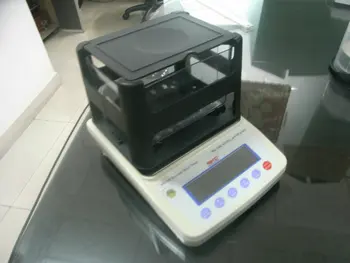
a tropical disease that afflicts 18 to 120 million people worldwide. Density Of Gold , also called onchocerciasis, a tropical disease that afflicts 18 to 120 million people worldwide.
Scientists at Scripps Research have developed a urine diagnostic to detect the parasitic worms that cause river blindness, also called onchocerciasis, a tropical disease that afflicts 18 to 120 million people worldwide.
, the new, non-invasive test may provide an inexpensive method of determining in real time whether a person has an infection, which would give public health officials and doctors critical information for tracking outbreaks and treating current infections.
"River blindness affects individuals both in Africa and Latin America, and because many of these endemic regions are difficult to access, what is needed in the field is an inexpensive point-of-care means to monitor the disease," says Kim Janda, PhD, the Ely R. Callaway Jr. Professor of Chemistry and member of the Skaggs Institute for Chemical Biology at Scripps Research.
River blindness is a filarial disease, like elephantiasis, and occurs when the parasitic worm Onchocerca volvulus takes up residence in the skin. Adult worms pump out babies (microfilaria) at an alarming rate, which are ultimately re-spread by blackfly bites. The microfilariae can migrate to the eye and die, releasing toxins and causing inflammation. People with the disease will slowly go blind without medical intervention.
Janda says onchocerciasis monitoring and evaluation are especially necessary steps for people leading elimination efforts. To know if these efforts are working, doctors need to be able to show when disease transmission has been interrupted. The current gold standard for detecting the parasitic worms is a "skin snip" biopsy. However, snips are generally insensitive indicators of infection, and the sensitivity of the skin snip decreases as the density of microfilaria in the skin decreases. Other tests cannot distinguish between past and current infections.
Currently, onchocerciasis elimination programs rely primarily on mass drug administration of the therapy Ivermectin to suppress and eventually eliminate transmission of Onchocerca volvulus. Yet, without a means to evaluate if an infection is ongoing, it's hard to assess if prevention efforts are working -- and if it's safe for people to stop taking medication.
The new lateral flow assay took over 10 years to develop, but it is now ready for manufacturing and testing in the field. The key to the assay's success was in the making of designer antibodies to detect a unique biomarker that only shows up when a human host has metabolized a worm neurotransmitter called tyramine. Humans then secrete this biomarker in urine.
A negative on the "dipstick" test shows a colored line in the test. Got the parasite? The test would show no lines.
Unlike the skin snip biopsy, Janda says this non-invasive test is the first to use a metabolite produced by adult worms. Moreover, the dipstick's inexpensive design, coupled with smartphone apps, would offer automatic image processing, which ultimately could translate to address critical gaps in the surveillance and treatment of river blindness.
Ryan Shirey, Daniel Globisch, Lisa M Eubanks, Mark S Hixon, Kim D Janda.
Non-Invasive Urine Biomarker Lateral Flow Immunoassay for Monitoring Active Onchocerciasis
Scripps Research Institute. "New urine dipstick test detects cause of disease that blinds millions." ScienceDaily. ScienceDaily, 27 August 2018.
Scripps Research Institute. (2018, August 27). New urine dipstick test detects cause of disease that blinds millions.
. Retrieved August 28, 2018 from www.sciencedaily.com/releases/2018/08/180827151430.htm

Scripps Research Institute. "New urine dipstick test detects cause of disease that blinds millions." ScienceDaily. www.sciencedaily.com/releases/2018/08/180827151430.htm (accessed August 28, 2018).
Effectiveness of Point of Care Diagnostics for Schistosomiasis
An independent review has been conducted to assess how well point of care tests detect Schistosoma infections in people living in endemic regions Schistosomiasis, also known as bilharzia, is a ...
Possible Strategy Identified to Combat Major Parasitic Tropical Disease
A potential target in the quest to develop a more effective treatment for leishmaniasis, a parasitic tropical disease that kills thousands and sickens more than 1 million people worldwide each year, ...
New Test Will Combat Major Cause of Preventable Blindness in Africa
Scientists have developed a point-of care diagnostic tool for Onchocerciasis, commonly known as river blindness. This is one step toward the elimination of neglected tropical diseases, a group of ...
A Paper Diagnostic for Cancer: Low-Cost Urine Test Amplifies Signals from Growing Tumors to Detect Disease
A low-cost urine test amplifies signals from growing tumors to detect disease. Cancer rates in developing nations have climbed sharply in recent years, and now account for 70 percent of cancer ...
Below are relevant articles that may interest you. ScienceDaily shares links and proceeds with scholarly publications in the
Genetic Analysis of Florida's Invasive Pythons Reveals a Tangled Family Tree
More Workers Working Might Not Get More Work Done, Ants (and Robots) Show
Severe Bloating Density Of Gold , Severe Bloating
Air Pollution Reduces Global Life Expectancy by More Than One Year
Nearly Two Million Acres on Fire in the United States Density Of Gold

DNA Analysis of 6,500-Year-Old Human Remains With Blue Eye Mutation
Neanderthal Mother, Denisovan Father! Hybrid Fossil
Fossil Turtle Didn't Have a Shell Yet, but Had the First Toothless Turtle Beak
In the Race of Life, the Tortoise Beats the Hare Every Time
In Parasitic Worm Infection Both the Host and the Worm Produce Cannabis-Like Molecules
Macaws May Communicate Visually With 'Blushing,' Ruffled Feathers
Fossil Turtle Didn't Have a Shell Yet, but Had the First Toothless Turtle Beak
Neanderthal Mother, Denisovan Father! Hybrid Fossil
Napoleon's Defeat at Waterloo Caused in Part by Indonesian Volcanic Eruption
Get the latest science news with ScienceDaily's free email newsletters, updated daily and weekly. Or view hourly updated newsfeeds in your RSS reader:
Keep up to date with the latest news from ScienceDaily via social networks:
Tell us what you think of ScienceDaily -- we welcome both positive and negative comments. Have any problems using the site? Questions?
or by other parties, where indicated. All rights controlled by their respective owners.
Content on this website is for information only. It is not intended to provide medical or other professional advice.
Views expressed here do not necessarily reflect those of ScienceDaily, its staff, its contributors, or its partners.

Financial support for ScienceDaily comes from advertisements and referral programs, where indicated.


0 Reviews:
Post Your Review