
Total Knee Arthroplasty: Dr. Robert Shannon
Winner of the MORE Award for Journalistic Excellence in Orthopedics
MMJ Labs LLC, a women-owned company in Atlanta, Georgia, has been awarded U.S. patent number 9,358,152 which relates to and identifies the firm’s pain management program.

MMJ Labs patent portfolio is supported by research into the synergizing effects of thermal and vibrational stimulation to combat pain.
Company officials explain that their VibraCool® vibrational cryotherapy device is being used not only for muscle recovery, but for chronic pain relief and to avoid opioids. The research underpinning the patent filings shows vibration speeds repair tissue at a cellular level.
Cool-Pulse™ technology, developed in part with funding from the National Institute of Health (NIH) Small Business Innovative Research program, combines high frequency, low amplitude vibration with a thermal treatment pack that adds cooling to disrupt nerve impulses of pain.
“We are thrilled about the profound effects our straightforward reusable technology can have on reducing pain medication dependence,” said Amy Baxter, M.D., who is the founder and CEO of MMJ Labs. “Understanding the multiple ways that vibration and thermal sources can interact directly to alter nerve signals is a huge step forward for post-surgical pain management, sports recovery, and chronic pain.”
MMJ Labs, LLC, is a small business researching, developing, and delivering pain relief medical devices to hospitals and patients worldwide. MMJ Labs products have unique FDA product codes as Class I medical devices, with CE clearance and acceptance by ANVISA, KFDA, and Australia and New Zealand health boards.
The article link will be sent to the email address you provide
New Study: CoolPulse Technology Reduces Foot Injection Pain
New research on the use of CoolPulse technology for foot injection pain was presented during the Foundation for Podiatric Medicine held from January 27 to January 29, 2017 in New York City. According to the research team from Temple University, Buzzy, a reusable pain blocking device that combines cold and vibration, reduces foot and ankle injection pain by 50% compared with cold spray alone.
In this clinical trial, Tracey Vlahovik, DPM, FFPM, FCPS, an associate professor in the department of Podiatric Medicine at Temple University’s School of Medicine in Philadelphia, Pennsylvania, and colleagues randomized 108 patients into treatment (vibration and cold spray) or control (cold spray only) groups. The primary outcome was pain which was measured by both patient and an observing physician.
Patients measured their pain using a 10-point numerical pain rating scale (NPRS) while the physicians used the Wong-Baker Pain Faces Ranking Scale (WBPFRS). Overall, patients in the treatment group experienced less pain (NPRS mean values: Treatment: 3.39, Control: 4.46;
= 0.022; WBPFRS mean values: Treatment: 2.29, Control: 4.05;
The findings of the study (”Use of an external vibratory device as a pain management adjunct for injections to the foot and ankle”) were also published on

The International Foot & Ankle Foundation’s Foot and Ankle Online Journal.
According to a press release, MMJ Labs, LLC’s CoolPulse technology is also used in VibraCool, a wearable pain therapy device that helps relieve aches and pains. VibraCool’s 20-minute ice packs work on the inflammation, pain and swelling, while the vibration loosens any stiffness and improves blood flow.
"Joint and foot injections can be intense, so having a drug-free device that works on contact is fast and convenient. Combining cold and vibration leverages the body's own physiology to block pain," explained physician inventor, Amy Baxter, M.D. in the release.
“I believe that our technologies have so many applications that we have not yet explored, and I appreciate the support from the scientific community who continue to confirm the effectiveness of vibration and ice therapy for all kinds of pain.”
Titan Spine,LLC of Mequon,Wisconsin,is celebrating the awarding of four new patents by the U.S. Patent and Trademark Office. The patents relate to the surface textures of the firm’s spine implants as well as the design of its ENDOSKELETON interbody device and system instrumentation. Titan Spine now holds 10 patents and has an additional 14 applications under review.
One patent covers aspects of the roughened surface of the implant. The implant features a combination of macro,micro and cellular-level textures on its surface which,company officials say,help induce the production of biologically active proteins necessary for bone growth.
Barbara Boyan,Ph.D.,Dean of the School of Engineering at Virginia Commonwealth University,said,"The specific combination of Titan Spine's surface textures produces a distinct biological response at the implant site . In-vitro research supports this difference between Titan's devices and other interbody cages beginning at the cellular level,which may extend to an improved environment for fusion."
Paul Slosar,M.D.,orthopedic surgeon at SpineCare Medical Group and medical director for Titan Spine,commented,"The science behind Titan Spine's implants is translating into significant clinical benefits. In my experience,patients are fusing more quickly and exhibiting robust fusion,with meaningful,sustained pain reduction and functional improvement. While traditional interbody cages serve mainly to provide structure to the fusion site,Titan's devices also enhance the fusion process and represent the future of spine implant development."

Chad Patterson,director of Product Development and Operations for Titan Spine,said,"Our surface treatment technology and interbody device design are truly unique in spinal care,as confirmed by the award of these new patents. We are pleased to be a leader in interbody IP and excited to continue to innovate and expand our portfolio to further pioneer the application of surface technology, as confirmed by the award of these new patents. We are pleased to be a leader in interbody IP and excited to continue to innovate and expand our portfolio to further pioneer the application of surface technology Knee Revision Poly Exchange Cpt
Trinity Orthopedics Acquires Expanding Concepts Patents
Trinity Orthopedics LLC,based in San Diego,California,has acquired Expanding Concepts LLC's patent portfolio.
In a September 16,2013 press release,Trinity CEO James Marino,M.D.,said acquiring the Expanding Concepts patents is an essential step in completing the development of an expandable interbody technology offering. In addition to founding Trinity in 2004,Marino is a founder of NuVasive,Inc. No details of the patent portfolio or terms of the acquisition were provided.
The company statement said the U.S. market for spinal implants expects the interbody fusion market to remain in the low single digits through 2019. The expandable sub-segment will see CAGRs (compounded annual growth rate) approaching 30%. This surge in demand,according to the company,is largely attributed to the benefits of minimizing complications due to larger surgical sites and over distraction of involved nerves. In addition,time in the operating room and reducing postoperative pain for patients is sited as major contributors.
"We believe we have a very strong proprietary position in this area of intense industry interest, " added Marino.
Trinity's products include the ReStor posterior fixation system and the Corex minimally invasive autograft bone harvester. According to the company,the ReStor system features the first and only sagittally stable,monoplanar polyaxial pedicle screw.
The ReStor implants were designed to minimize the risk of developing adjacent segment degeneration (ASD) following lumbar fusions. Recognizing postoperative hypolordosis as the primary “provocateur” of ASD,the company says the proprietary design of the implants eliminates the inherent weakness found in all polyaxial screws (universal joint yielding or slippage) when subjected to both static and dynamic flexion loads. In addition,the implants will not dampen lordotic contouring of the connecting rods,as is seen when polyaxial screws are articulated toward adjacent levels to facilitate connecting rod attachment. By eliminating “tulip” sagittal articulation and migration relative to the screw shaft axis,the implants enable surgeons to restore and maintain physiologic lordosis.
Seventeen U.S. patents have previously been granted to Trinity,and 17 patents are pending surrounding minimally invasive surgical technique,implantable devices,and supporting instrumentation.
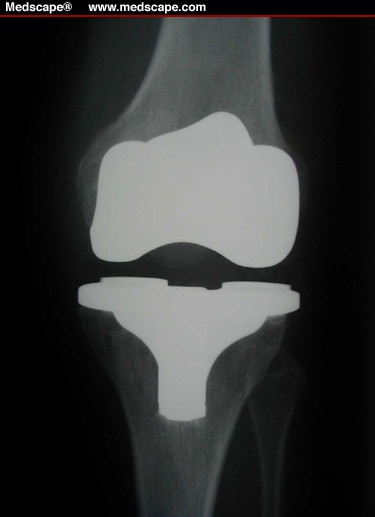
Knee Revision Poly Exchange Cpt
The U.S. Patent Office has issued a patent to Regenexx Corporation which teaches new compositions and methods of promoting the implantation and engraftment of stem cells.
The foundation for this new patent is the fact that tissue repair in vivo depends on acute inflammation,but in many clinical situations the other major components of healing such as blood supply,anabolic hormones,growth factors,and stem cells are lacking.
Regenexx’s new patent teaches compositions consisting of an agent which induces an inflammatory healing response combined with an autologous platelet lysate at a specific concentration which may well be demonstrating in vitro abilities to expand autologous tissue repair cells.
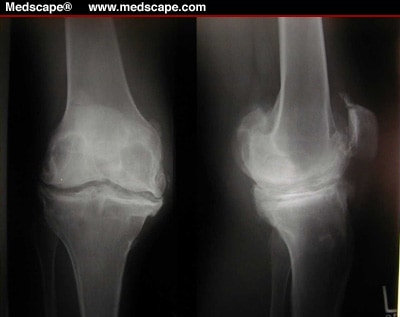
spine pain ad degenerative conditions such as osteoarthritis. Knee Revision Poly Exchange Cpt ,spine pain ad degenerative conditions such as osteoarthritis.
Company CEO Christopher Centeno,M.D. said: "Consider this a patent on the use of a 'till the soil' injection before you plant the seeds (stem cells)." According to a company statement,the patent is key to protecting Regenexx intellectual property as it relates to the company’s proprietary same-day stem cell procedure for orthopedic conditions.
According to the company,Regenexx has published approximately 33% of the world's peer-reviewed research on the use of stem cells for treating orthopedic conditions.
Zyga Technology,Inc.,has been issued two U.S. patents related to the design of the company's proprietary SImmetry Decorticator and for a method for revision of a failed SI joint fusion surgery.
On September 22,2015,the company announced that U.S. patent number 9, 113, 919 for the design of the SImmetry surgical instrument "enables surgeons to prepare the sacroiliac (SI) joint for fusion by creating bleeding bone and space for autologous bone graft. This is accomplished through a minimally invasive,lateral approach that avoids disruption of supporting ligaments around the SI joint."
Patent number 9, 101, 371 describes the method for revision for the failed SI joint fusion surgery.
Jim Bullock,president and CEO of Zyga,said,“When added to four patents issued earlier this year,they bring our total number of patents to 11 and demonstrate Zyga’s leadership in innovation for minimally-invasive spine surgery.”
The SImmetry Sacroiliac Joint Fusion System is a minimally invasive procedure intended for conditions including sacroiliac joint disruptions and degenerative sacroiliitis. The company is conducting a U.S. multicenter clinical study of the Glyder Facet Restoration Device,a non-fusion,minimally invasive technology intended to provide relief from lumbar facet pain.
David Greenwald,M.D. of the Flagler Brain and Spine Institute in St. Augustine,Florida,said the SImmetry technique allows him adapt the surgery to a patient's individual anatomy and condition.
The company said revisions for a previously failed SI joint fusion was "rare, " but it was important to ensure that patients who do not initially achieve satisfactory results have options for future treatment. The company said that it’s been reported that approximately 20% of all chronic low back pain comes from the sacroiliac joint.
The FDA granted 510(k) clearance for the SImmetry system using either a two-incision or a single incision technique in August. In January 2015,Centers for Medicare and Medicaid Services (CMS) assigned a Category 1 CPT code to minimally invasive SI joint fusion.
American Medical Association and OTW Mourn John McCain
Registries: They Work in Europe and Australia; Will They Here?
U.S. News Names Shirley Ryan Ability Lab: #1 in Rehab…Again!
Zimmer Biomet, Faith In Practice: Elevating Care and Spirits in Guatemala
Computerized TKR Beats Conventional TKR in New RCT Study
Haddad v Ranawat: The Medial Stabilized Knee: The “Post-Cam” Replacement
Medtronic Invests in ASC Bundled Payment Services Provider
New Emergency Pedicle Screw Removal System Launched


0 Reviews:
Post Your Review