
BUN (Blood Urea Nitrogen) What is it? What does it mean?
For the best possible experience using our website we recommend you upgrade to a newer version or another browser.
Your browser appears to have cookies disabled. For the best experience of this website, please enable cookies in your browser
We'll assume we have your consent to use cookies, for example so you won't need to log in each time you visit our site.
‘The RCN must recruit well in a year of nurse leadership change'
'Almost half' of maternity units closed doors at least once last year
Nominations open for first nursing award in memory of Amin Abdullah
Hospital launches course to teach nurses how to read ECGs
Queen's Nurse breaks new ground for LGBT people with dementia
Flu immunisation in England: helping nurses to protect patients
The 2018/19 flu season is getting nearer. This article sums up what nurses in England need to know to help protect their patients, the wider community and themselves. It comes with a handout for a journal club discussion
Roundtables, analysis, interviews and investigations
'Almost half' of maternity units closed doors at least once last year
Staff praised for 'professionalism' after midwife murder
Nominations open for first nursing award in memory of Amin Abdullah
Hospital launches course to teach nurses how to read ECGs
Have you been shortlisted for the Nursing Times Workforce Awards?
We have just released details of the nurses and nursing teams that have made it onto the shortlist for this year’s Nursing Times Workforce Awards.
Flu immunisation in England: helping nurses to protect patients
Respiratory rate 4: breathing rhythm and chest movement Inr Medical Abbreviation
Enhancing leadership in infection prevention through training
When is wound cleansing necessary and what solution should be used?
Flu immunisation in England: helping nurses to protect patients
The 2018/19 flu season is getting nearer. This article sums up what nurses in England need to know to help protect their patients, the wider community and themselves. It comes with a handout for a journal club discussion
Nurses having to revalidate is ‘improving attitudes and behaviours’
Building a professional identity: views of pre-registration students
Nurses denied access to CPD 'due to staff and funding pressures'
A framework to promote professionalism in everyday practice
'Over the last three years, I have learnt not to be so hard on myself'
'Compassionate communication is an essential skill'
Improving mental health care for people with learning disabilities
Student NT editor Rebecca Hammond asks how we can provide mental health support to people with learning disabilities.
'Apprenticeships are a brilliant opportunity for people to join the NHS'
'This new guidance will help us ensure the adults we safeguard are able live without fear'
'Legislative change alone is not a panacea to the critical shortage of donor organs'
'We need to be more innovative if we want to solve the nursing recruitment crisis'
Time to celebrate the rich heritage of nursing journals
I was contacted around a month ago out of the blue by an organisation telling me the good news that Nursing Times was to be inducted into an international ‘hall of fame’ for publications that have made significant contributions to the profession.
Our subscription package is aimed at qualified nurses to help support CPD and improve the quality and delivery of care given to patients.
Our package is designed for organisations who want to purchase access and benefit from a group saving.
This subscription package is aimed at student nurses, offering advice and insight about how to handle every aspect of their training.
How to avoid drug errors: the five "rights" of medicines administration Inr Medical Abbreviation
Chris Tyreman looks at common causes of drug errors and explores how the five rights of medication administration can help nurses prevent them
I left nursing school with a first class degree; unfortunately the same could not to be said of my drug administration skills. On acute placements I had not got to grips with the drug round, and on the community placements, there was no drug trolley.
There was no job either. Preceptorship came three months later, but I wanted to work as a trained nurse straight away, so I signed on with a nursing agency. I completed my first shift in 30+ bed EMI nursing home as the nurse in charge; from zero to hero in 12 hours. Well not quite. After a minimal handover, I took possession of the keys, aware that six months had passed since I had administered any medication (apart from insulin). There were two drug trolleys (one for each floor) filled with racks of blister packs, bottles and packets of all descriptions, containing unfamiliar medications, placed in an order known only to the last user. I could work out drug dosages, having taught maths for 12 years, but I had yet to master medication administration.
Administering drugs in a hospital has its advantages; patients wear name bands and stay in their own beds. In an EMI home you get a photo that resembles one or possibly more than one resident, people who wander into each others’ rooms, and when asked, “Are you Peter Roberts?” respond in the affirmative when they are in fact Robert Jones, though to be fair, the person may have only heard the word Roberts. Ask patients for their names; don’t tell them.
You may not realise it, but there are approximately 200 people in the UK with the same date of birth as you, that’s day, month and year, but only one lives at your address. Be careful when identifying patients; I have seen the right person wearing the wrong name band. So you’ve known Robert (Bob) Jones for the first three months following his stroke. You never almost everything there is to know about him: what food he likes; his family and friends; daily routine; and maybe even his medications. Nevertheless, it pays to adopt a consistent and systematic approach with every patient. “Name and address please” (Bob).
Avoid distractions.The red tabard, worn by the nurse dispensing the drugs is fine in principle, and also in practice, if somebody bothers to tell the patients what the red tabard means. Not everybody takes note of “Nurse on Drug Round. Do not disturb”. Fewer interruptions mean less chance of a mistake and less time to complete the drug round.
You can only medicate one patient at a time, so some patients get their drugs when they should and others get it later. In a 35-bedded home, working nights with four patients on PEG feeds I struggled to complete the drug round in less than two hours (and any longer would have been a drug administration error). Never rush, but if you cannot complete the drug round within one hour seek help from other trained staff. The person who dispenses the medication should be the one to give it. Ask the patient “Are you ready to take your tablets”. If they are not, then do not pot them out. When you initial the drug chart it means that the patient has taken the drugs, not that you have left them on the bedside cabinet. Some patients need their medications at different times to everybody else, for example, those taking Parkinson’s drugs and those taking on oral biphosphonates, which can be easily overlooked.

or the same information printed legibly in black ink Inr Medical Abbreviation , either a current patient identification label, or the same information printed legibly in black ink, with any known adverse drug reaction (ADR) recorded on the front. If you make a handwriting mistake it must be struck through and initialled, not erased or obliterated.
The most common drug error is that of ‘omission’, when the drug is not available on the ward or the nurse cannot find it, or when a section of the drug sheet is missed. The opposite error occurs infrequently when the nurse fails to spot that the treatment has ceased (eg for 7 days only) and carries on with it, copying what was done previously, without reading the prescription; ideally the prescriber should draw a line through the boxes beyond the time when the treatment is complete. Errors can arise if the nurse fails to check the route of drug administration or the medication itself. For example Furosemide is frequently taken orally but it can also be administered by the intramuscular (i.m.) or intravenous (i.v.) routes. A box of pre-filled Clexane syringes might say 40 mg on the outside, but the needles inside are 100 mg (pharmacy error); different doses have different coloured labels. Do not administer a drug where the instructions are unclear or ambiguous, or the writing is illegible. Never make any assumptions or jump to any conclusions about the prescribers’ intent; contact the doctor for clarification.
The front page of the medication sheet is for once only, ‘premeds’ (i.e. medication before surgery) and nurse initiated medicines. The following must be documented in the correct columns: date prescribed; generic name of medication; route of medication (using the accepted abbreviation e.g. i.m.); dosage, date and time for administration; prescriber’s signature and printed name; initials of the person administering the medication and the time.
Nurse initiated medications are those that the hospital policy guidelines permit nurses to administer. Typically, this list includes: simple analgesics (e.g. paracetamol); cough suppressants; antacids; artificial tear drops; sodium chloride 0.9% flush; inhaled bronchodilators (e.g. Ventolin); laxatives (e.g. Movicol); and sublingual nitrates (e.g. Nitrolingual).
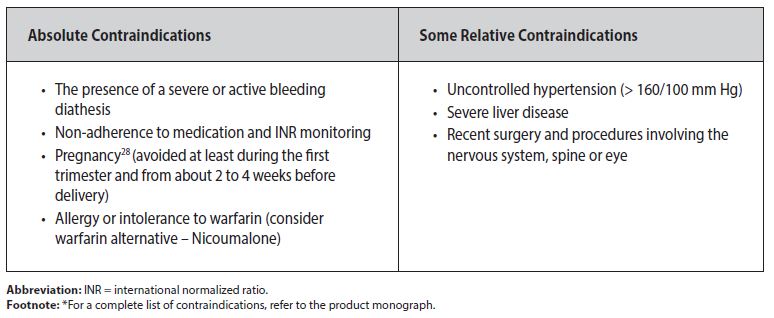
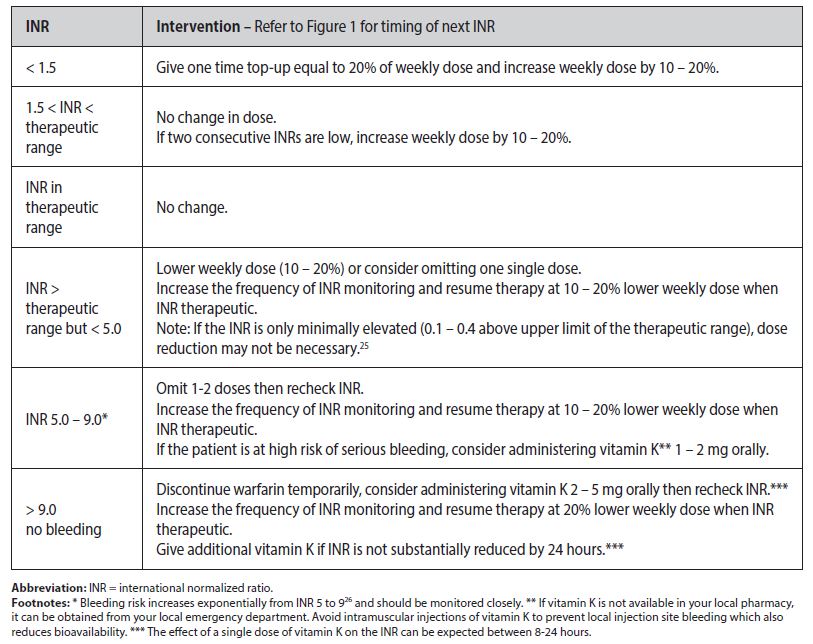
The second and third pages are for regular medications, including variable dose drugs where the dose is based on laboratory blood test results. Variable dose therapies include lithium carbonate, steroids on a reducing protocol, and the anticoagulant warfarin, which requires the INR (International Normalised Ratio) result to be recorded. When a medication is not given, the nurse must record the reason for non-administration by entering the appropriate code in the box and initialling the entry. If a medication is withheld, the reason (e.g. adverse reaction), should be documented in the patient’s notes as well as on the medication chart . Nil By Mouth (NDM) or fasting does NOT include oral medications unless specifically requested by the medical team
Medication errors not related to dosage calculations
Wrong patient (e.g. similar or same name; mix up when a second nurse is involved);
Wrong dose (e.g. pharmacy or doctors’ mistakes; nurse administration errors e.g. omissions, treatment completed, wrong strength or double dosed).
Wrong route (e.g. given orally instead of by injection or intravenously);
Wrong time (e.g. Parkinson’s drugs given late; with food instead of on an empty stomach);
Wrong drug (e.g. similar looking pills or packaging; mislabelling with contents not checked against packaging)
Fortunately, most drug calculations errors are made in nursing school tests. In practice, the need for calculations is frequently obviated by the simplicity of the dosing regimes (e.g. 1 gram of paracetamol is two 500 mg tablets), by the pharmacy having done the calculation for you (e.g. paracetamol 250 mg/5 ml; take four 5 ml spoonfuls) or the doctor having to calculate the dose based on test results, or the patient’s body weight.
If you have to make a calculation then the WIG equation is suggested. However, acronyms are often more difficult to remember than words they represent and the WIG equation can be confusing with all those W’s: What youWant x what it’s In /What you’veGot. Instead I use:
Dose prescribed ÷ Dose per measure x volume of measure
The prescription states 300 mg and your stock ampoule contains 500 mg in 4 ml. What volume is required? Well you might guess that a fraction is involved i.e. not the whole 4 ml but only part of it, in which case so we can put the 300 over the 500 to get a fraction and then multiply it by 4 ml:
300 mg (dose prescribed) ÷ 500 mg (dose per measure) x 4 ml (volume of measure) = 2.4 ml (on a calculator worked from left to right: 300 ÷ 500 x 4 =)
Without a calculator: 300/500 = 3/5 = 6/10 = 0.6; 0.6 x 4 ml = 2.4 ml
alternatively: 300/500 = 600/1000 = 0.6; 0.6 x 4 ml = 2.4 ml
Never use an unnecessary terminal zero, as in 2.40 gram, which may be read as 240 gram if the point is missed. A zero should always be placed before a decimal point for numbers less than unity i.e. 0.5 gram and not .5 gram or the decimal point might be missed again i.e. 5 gram. A better way is to avoid using decimal points wherever possible, by choosing a smaller unit, for example 500 milligram, instead of 0.5 gram.
Only use widely understood abbreviations that are consistent with your hospital policy.I once asked a self-medicating patient why she was not taking her tablets. Her reply was that they were out of date; it said so on the packaging (O.D.).
Patients make a lot of mistakes with their medications and many have no idea what they are taking them for. Only recently I informed a patient that the brown, oval-shaped tablet with the number 40 written on it would help to keep lower her cholesterol. She had been taking it at 8 p.m. every day and assumed it was a sleeping pill.
You can promote patient concordance with treatment regimes if you have the appropriate knowledge.It takes only a moment to check that the patient inhales the bronchodilator (e.g. Ventolin) to open up the airways, before inhaling the corticosteroid, i.e. to take the blue one before the brown one. A spacer device (e.g. Aerochamber) can help with any lack of co-ordination. The patient shakes the canister, inserts it into the chamber, presses down once and takes six breaths; if the whistle sounds, the breathing is too quick and some of the drug hits the back of the throat where it is swallowed instead of entering the lungs.
For patients who self administer insulin, check if they know how to: mix it, if biphasic (e.g. invert and roll the pen x 10), inject at 90
and wait for 10 seconds, keep to the same time of day; rotate between suitable injection sites; and monitor blood glucose in accordance with NICE guidelines (e.g. when unwell, to avoid hypoglycaemia and during insulin dose adjustments).
For patients who need Clexane (Enoxaparin) injections after they have left hospital, and are able to self-administer it, it helps if the dose is rounded up to the nearest full syringe.
British Medical Association and the Royal Pharmaceutical Society of Great Britain, London
: Australian and New Zealand edition. Woodslane Press, Warriewood NSW.
. National Institute for Health and Clinical Excellence, London
How to Master Nursing Calculations: Pass numeracy tests and make sense of drug dosagecharts.
Premature twins born at the scandal-hit Stafford Hospital died after receiving an overdose of morphine administered in error, a Nursing and Midwifery Council hearing has been told.
'Care home safety must not play second fiddle to the acute sector'
A renewed focus on medicines management in care homes is needed, says the NPSA’s Bruce Warner
Hospital makes partial U-turn on 'do not disturb' tabards
The acute trust at the centre of a media storm over the use of “do not disturb” tabards during drug rounds has decided to remove the controversial wording from the garments.
Patient group sparks debate over 'do not disturb' tabards
A patients’ campaign group has criticised the increasing use of “do not disturb” tabards by nurses as a method of reducing medication errors during drug rounds.
A Rapid Response Report by the National Patient Safety Agency outlines how risks associated with insulin administration can be minimised to prevent harm
Using pharmacists to manage medication could cut mistakes in elderly care homes by 91%, according to research.
Dangerous diabetes drug still prescribed despite warnings
People with diabetes are still being prescribed a potentially dangerous drug two months after safety experts recommended it should be taken off the market.
The effectiveness of drug round tabards in reducing incidence of medication errors
Medication errors can be caused by interruptions during drug rounds. This study reports on the impact of drug round tabards on such interruptions
Exploring the numeracy skills of nurses and students when performing drug calculations
Clinical effectiveness and patient safety are at risk if inaccurate drug doses are administered. This study revealed gaps in basic mathematical skills
Ongoing education would boost competency in drug calculations
Medication errors can have fatal results. Higher education institutes and trusts must continually develop students’ and nurses’ skills, say Maxine Pryce-Miller and Vernel Emanuel
Instead of WIG i find NHS easier to remember. That's what you Need divided by what you Have mulitiplied by what Solution it's in (it's usually a solution but works just as well with other thing such as vials of IV drug). Who could forget NHS!
Thank you for a superbly written and easy to understand article.As a student it is often difficult to get the necessary practice of drug rounds an drug calculations - on a busy ward there often simply isn't time available for you to do the drug round - very slowly - with a qualified member of staff.In other areas such as A&E and Community there isn't even the opportunity to do a proper drug round.
On the occasions that I have needed to do drug calculations it still astounds me the number of nurses who cannot do the simplest calculation without the aid of a calculator.Perhaps I am showing my age in that I was taught mental arithmetic at school!!!I must admit it gives me some pleasure when they look at me and say "Wow! You did that in your head??". Clearly age has some benefits
The little saying that has been here since time began .
The RIGHTdrug of the RIGHTdose to the RIGHTperson at the RIGHTTime
This little ditty was taught to me when training and learning drug administration in the early seventies ,just shows how these ways stand the test of time.

I don't think we need a little ditty to know that you are giving the right drug, the right dose to the right person as you do the drug administration. If the nurse is abit
Inr Medical Abbreviation
unsure of the above, or dim,they shouln't be allowed to do the drugs in the first place.
I worked in a neonatal unit....now thats what I call difficult calculations. However, once you know the formulas it is much easier.
We were taught five 'rights' - right drug to the right person at the right time in the right dose in the right way (intravenous/ oral etc.) Just a mental check to oneself.
I still work on a neonatal unit and yes drug calculations are challenging and the actual production of the desired amount often looks like a cross between an operative procedure and Cocktail! Woe betide anyone/anything who interrupts the proceedings as you have to start all over again - actually we're thinking of going on countdown [maths section only of course]. I just wish, sometimes, that Doctors [who think we are too slow because of the time it takes to draw up all the different components accurately] and Managers [who think we don't need any more staff] would appreciate the complexity involved.
Mmmm...asking the patient's name....try that in a dementia unit when you're new to the place AND the only registered nurse on duty!!!
I also found the article interesting. I think nurses use calculators to be sure they are working out the calculation correctly. Another thing to watch out for when administering drugs especially at night to a new patient is to ask the patient have they already taken any of the medication you are about to administer in the morning? As sometimes the Dr can prescribe a certain drug e.g. ramipril nocte and it can turn out that the patient has always taken it in the morning before coming into hospital. It is best to check.
Please remember that the submission of any material is governed by our
and by submitting material you confirm your agreement to these Terms and Conditions. Links may be included in your comments but HTML is not permitted.
Nurse cautioned for not doing CPR on ‘dead’ patient
Trust starts scheme to help its own staff after birth trauma
Staff praised for 'professionalism' after midwife murder
Exclusive: Dementia nursing not a ‘backwater’, insists charity
Janet Davies to step down from RCN in wake of pay anger
Figures reveal small fall in number of NHS nurses in England
Children’s nurses to receive awards from Harry and Meghan
Nurse cautioned for not doing CPR on ‘dead’ patient
Essex prison nurses carried out CPR on ‘clearly dead’ inmate
Janet Davies to step down from RCN in wake of pay anger
'The RCN must recruit well in a year of nurse leadership change'
Radcliffe: ‘We should be ashamed of how our fledgling nurses are treated’
Nursing director to meet with family of ‘bullied’ suicide nurse
Hospital launches course to teach nurses how to read ECGs
Senior Lecturer in Nursing – Non Medical Prescribing
£22128 - £28746 per annum, Benefits: accommodation available


0 Reviews:
Post Your Review